
CalPoly’s Lessons Learned from 2025 Packaging Challenge
Teef Story Team Talks Process and Collaboration
The Paperboard Packaging Alliance’s annual Student Design Challenge invites college students across North America to create innovative, paper-based packaging solutions.
Students in design, graphic arts, and engineering programs gain experience through creating real, recyclable packaging solutions.
In 2025, students were tasked with creating a packaging line for a pet care company, PPA Pets. They were required to include a DNA testing system or a similar lab-dependent item.
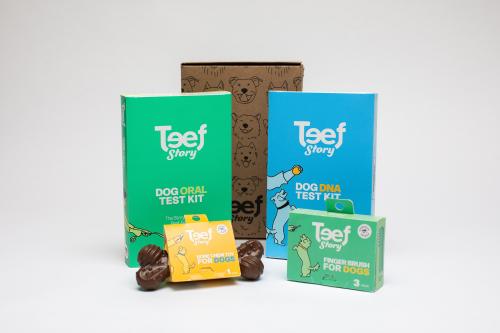
One of the finalist projects was Teef Story, entered by a team of students from California Polytechnic State University (CalPoly). We asked the students on the team about their experience.
Who you’ll hear from:
Maya Lojo — Industrial Technology and Packaging major with a concentration in Packaging
Jenni Martinez — Fine Arts major with a concentration in Graphic Design
Mairi O'Toole — Art & Design major with a Graphic Design concentration
What inspired your design concept for the challenge? Where did you go or look to seek inspiration?
“Our design was inspired by the storybooks we loved as kids, the ones with hidden flaps and little surprises tucked inside. We wanted to bring that same sense of curiosity and discovery into our packaging, but with a fun twist tailored for dog lovers.” — Maya Lojo
“Our design concept stemmed from the idea of telling the story of your dog. Your dog’s story begins with their health, and we wanted to implement a storybook like elements throughout our design. This started with having our DNA kit mimic the orientation of a book as well as the experience of flipping ‘pages’ to reveal the steps and action required.” — Jenni Martinez
What was the most challenging aspect of designing a packaging solution that also needed to be widely accepted for recycling?
“The most challenging part was balancing creativity with reality. The prompt gave us so much freedom to dream up different routes and designs, which was exciting, but also a little overwhelming.
When you have endless possibilities, it is easy to get carried away with ideas that might look amazing on paper but would not be practical once you think about recycling systems or real-world applications.” — Maya Lojo
“The most challenging aspect of designing this solution for recycling was creating a second life for the packaging.” — Mairi O’Toole
What did you learn throughout this process about designing a paper-based solution?
“We had to constantly pull ourselves back and ask, ‘How will this actually work down the line?’” — Maya Lojo
“We learned how important it is to keep our audience and customers in mind.
We had to create packaging that both informed the consumer and walked them through the instructions. We needed them to follow the instructions precisely without becoming overwhelmed. All while making it as convenient as possible.” — Jenni Martinez
What did you find most rewarding about participating in the PPA Student Design Challenge?
“Working together gave us the chance to share ideas, challenge each other’s thinking, and learn from different perspectives. Everyone brought their own strengths to the table, whether it was creativity, technical knowledge, or problem-solving, and that made the whole process much more dynamic. It was exciting to see how our individual ideas blended into one cohesive design.” — Maya Lojo
“The most rewarding thing was seeing the progress of our design each week. As we collaborated, I loved seeing how our designs would change and how we made progress towards our final design.” — Jenni Martinez
“The most rewarding part of this project was working with packaging design students and learning new concepts, such as packaging materials, processes, and liabilities. Terms such as “tamper-evident” were all new to me.” — Mairi O'Toole
What advice would you give to students entering future design challenges?
“My biggest advice would be to stay open-minded and patient throughout the process. Design challenges move quickly, and things rarely go exactly as planned. It is easy to get attached to an idea you have worked hard on, but part of the process is realizing that not everything will make it to the final product.” — Maya Lojo
“I would say that your team works best when you communicate with each other and allow each other’s thoughts and opinions to be heard and discussed. I would also not be afraid to take chances with your design and embrace its uniqueness!” — Jenni Martinez
“My team was fantastic. For future students, get to know one another, and meet up outside of school hours.” — Mairi O'Toole